


.jpg)
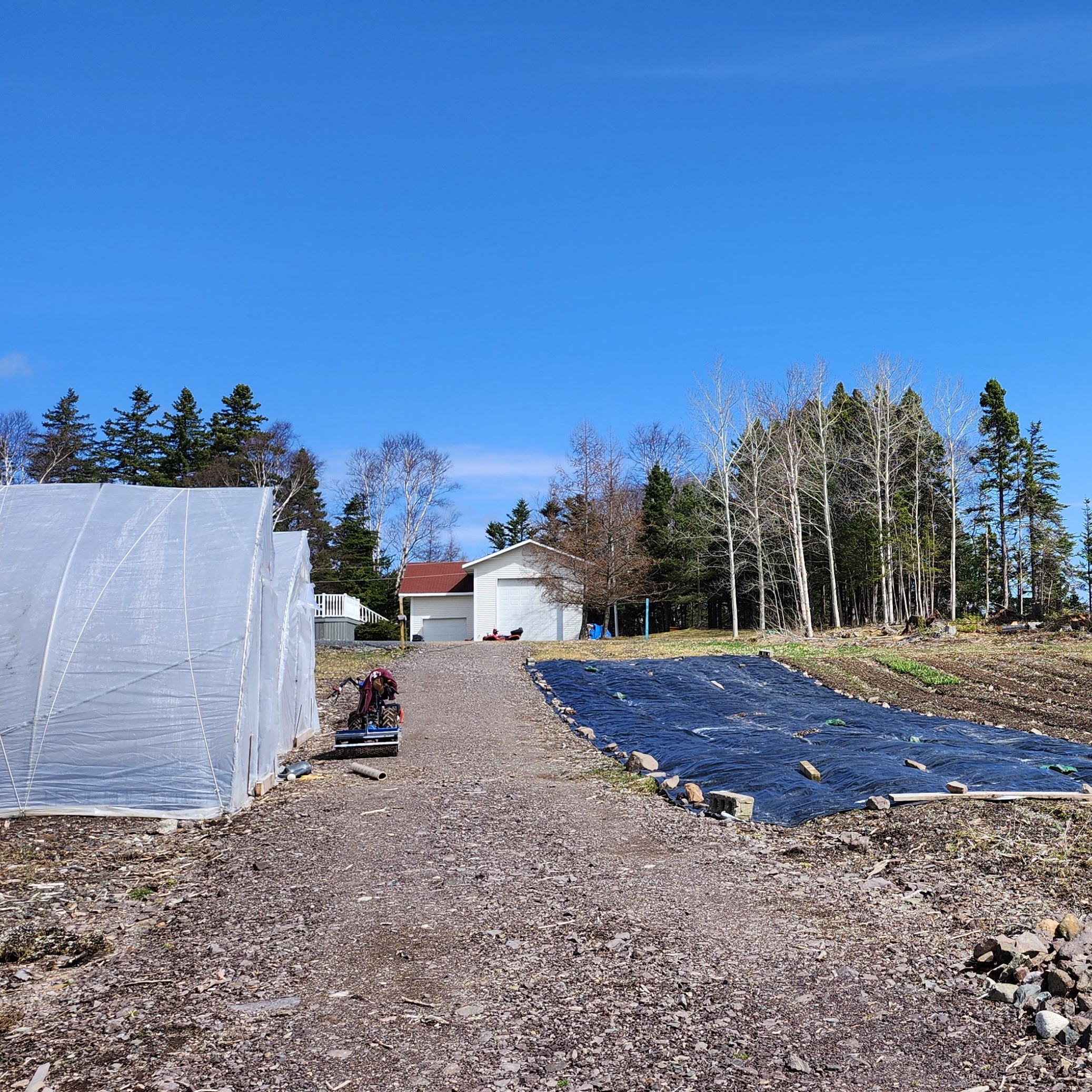
You can learn more about Outport Acres Farm on their website.
Farmer Stories
Outport Acres
Tell us about your farm.
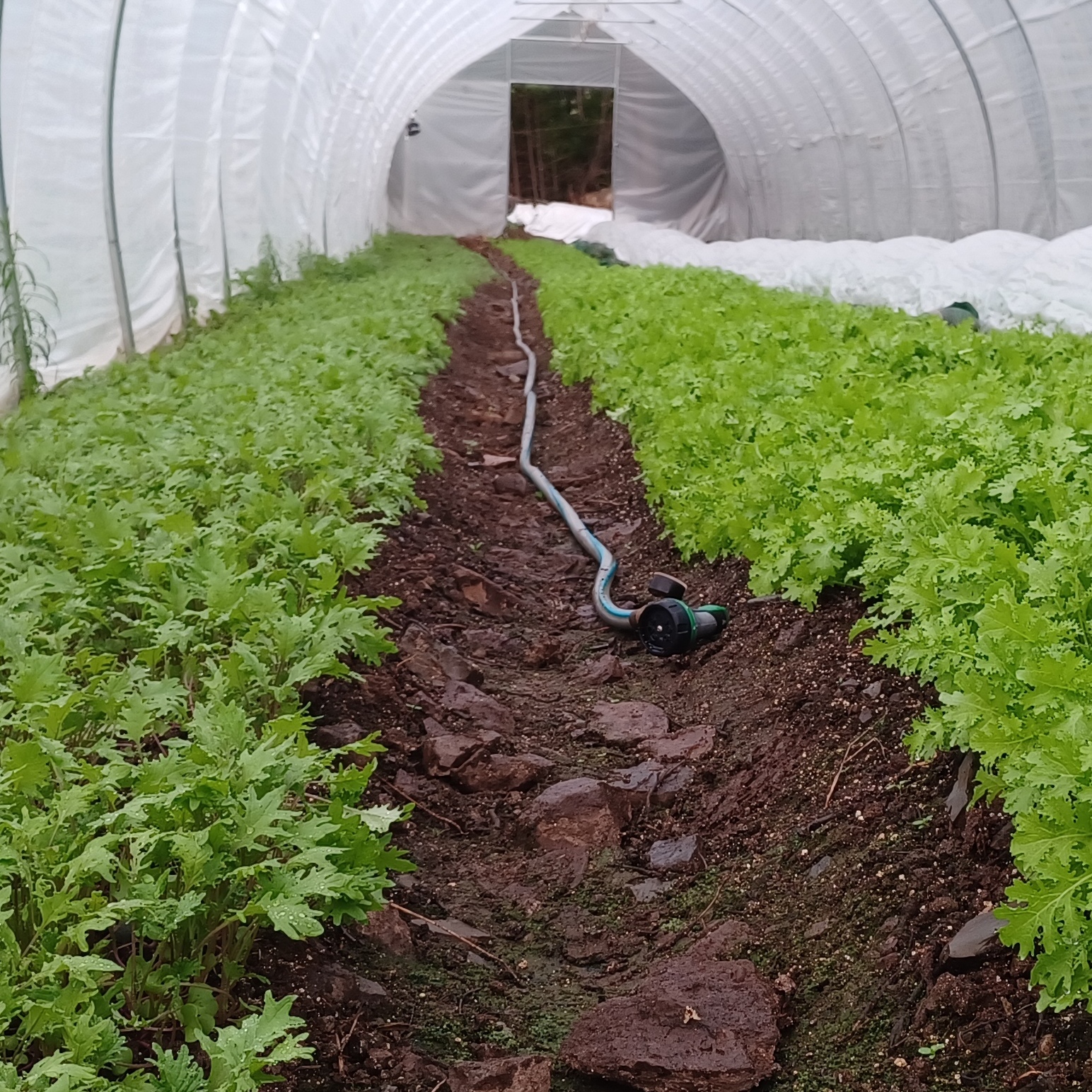
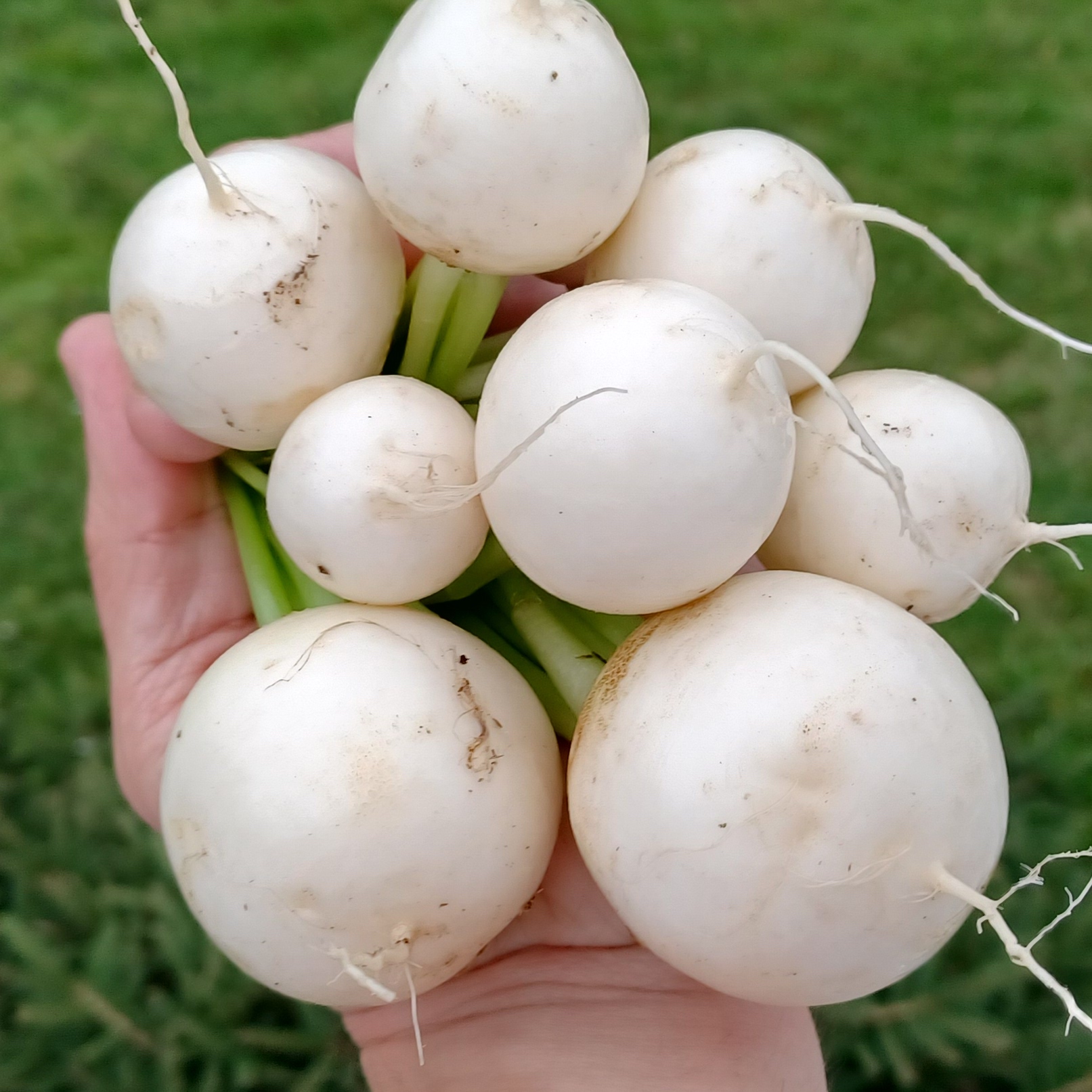
Outport Acres is a small-scale market garden based in Newfoundland. We follow a market garden model, growing a diverse mix of vegetables including salad greens, baby root vegetables, tomatoes, cherry tomatoes, sweet peppers, hot peppers, herbs like basil, dill, and cilantro, sugar snap peas, and ground cherries.
We also have a flock of pastured laying hens for egg production and a couple of honey bee colonies. We aren't producing honey commercially just yet, but that's a goal we're working toward over the next few years.
Everything we do is based on organic agriculture principles. We're not certified organic, but we don't use chemical pesticides, herbicides, or synthetic fertilizers. All of our soil amendments are organic inputs, and we try to grow food in cooperation with nature rather than in spite of it.
What do you produce?
Our main focus is mixed vegetables for market, along with microgreens and eggs. We also grow herbs and are gradually expanding our beekeeping operation.
Microgreens have been an important part of our business from the beginning. During the busy tourism season in the summer, we produce around 50 pounds each week for restaurants and other customers. In the winter, production slows to about 35 pounds per week, but it gives us a year-round crop and a steady source of income.
Who do you farm with?
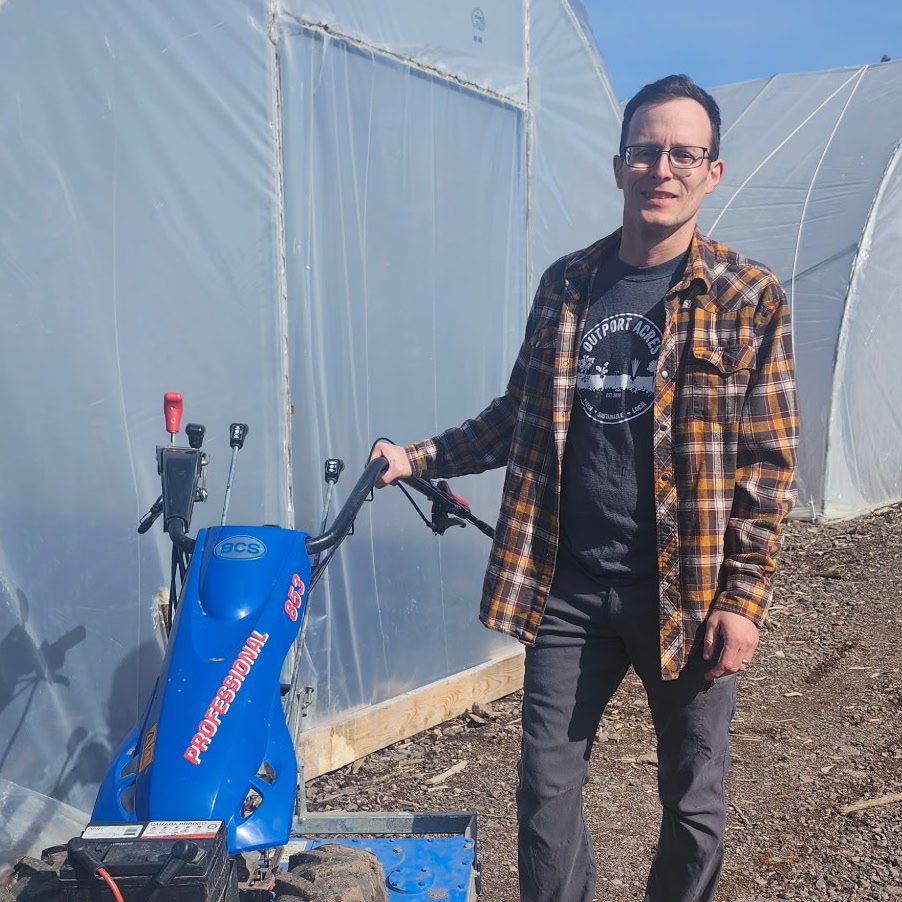
Right now it's just me managing about 1.6 acres of cultivated growing space. It's becoming a bit more than one person can comfortably handle, so this may be the year I hire someone as we continue to grow.
My wife has been a huge part of the journey, providing constant encouragement and support, and our two young children are growing up on the farm. They love running down to the greenhouse to pick cherry tomatoes and sugar snap peas, so it's wonderful to watch them develop that connection with where food comes from.
How did you start farming?
I started farming in 2019 while my wife and I were still living in the city. Because I had an indoor growing space, I focused almost entirely on microgreens. That allowed me to grow year-round and generate the revenue needed to get the business off the ground.
About a year later, we sold our house outside St. John's and moved back closer to my hometown, where we purchased our current 2.2-acre property. That's when the farm really began to expand into vegetable production while continuing to grow microgreens.
When did your farm begin using organic practices?
From day one.
I've never believed that chemical pesticides or synthetic inputs have a place in our food production systems, so we've avoided them from the very beginning.
Why do you farm organically?
For me, it's about producing food in a way that works with nature instead of against it. Farming organically aligns with my values, and I believe it's the right approach for building healthy soils, healthy ecosystems, and healthy food.
What's been your biggest challenge?
As a first-generation commercial farmer, I didn't inherit land, equipment, or infrastructure as many multi-generational farms do. Everything has had to be built from the ground up.
Every new piece of infrastructure—our caterpillar tunnels, greenhouse space, and now a heated high tunnel—has been funded by reinvesting back into the business. There's always another improvement or expansion that would help meet the demand, so balancing growth with available capital is probably the biggest challenge.
Growing in Newfoundland also presents its own unique challenges. We're affectionately called "The Rock" for a reason—we farm around a lot of rocks, our soils tend to be fairly acidic, and we have a relatively short growing season. But those challenges can all be managed with good planning and the right growing practices.
What gets you out of bed in the morning?
During the growing season, I genuinely look forward to heading into the greenhouse each morning. I love caring for the tomatoes and peppers—pruning, trellising, and getting everything ready for the week ahead.
Living where we farm is both a blessing and a challenge. It's hard to separate work from home life because the farm is always right outside the door. I'll sit down with a cup of coffee, look out at the greenhouse, wonder how the tomatoes are doing, and before I know it, I've spent an hour working.
At the same time, it's a wonderful way to raise our kids. They love being part of the farm, and it's rewarding to see them enjoying fresh vegetables straight from the greenhouse.
What advice would you give to new or young farmers?
Just get started.
Don't expect your farm to look like your dream right away. Building a farm takes years of learning, reinvesting, expanding, and adding infrastructure.
If you never begin, you'll never have anything. But if you start—even on a small scale—you'll have the foundation of your dream, and you can make it better every year.
Are there any important questions about being an organic farmer that weren't asked?
One thing worth mentioning is that while farming in Newfoundland certainly has its challenges, they're not impossible to overcome. With careful planning, persistence, and a willingness to adapt to local conditions, it's absolutely possible to build a successful organic farm here.