


Tavish and Anja are the owners and farmers of Farm on Forest in St. John's, Newfoundland. We had an inspiring conversation with both of them about their passion for growing with organic practices and the challenges they face on the rock.
Farmer Stories
Farm on Forest
-
.jpeg)
Tavish & Anja -
Anja broad forking -
-
_1.jpeg)
-
_1.jpeg)
-
Tell us about your farm.
We’re heading into our fifth season of farming. We started in the fall of 2021 by leasing a small plot on a farm near St. John’s, Newfoundland. At that time, we both still had full-time careers in other fields and were just interested in trying our hand at market gardening on a small scale.
Over the past several seasons, the farm has grown, and now both of us are farming full-time. For the past few years, we’ve been leasing about half an acre at Mount Scio Savory Farm in St. John’s.
Recently, we partnered with another local business, Mauzy Cider (a hard apple cider producer), and purchased a farm together. We’re currently in transition from our leased land to this new farm.
What do you produce?
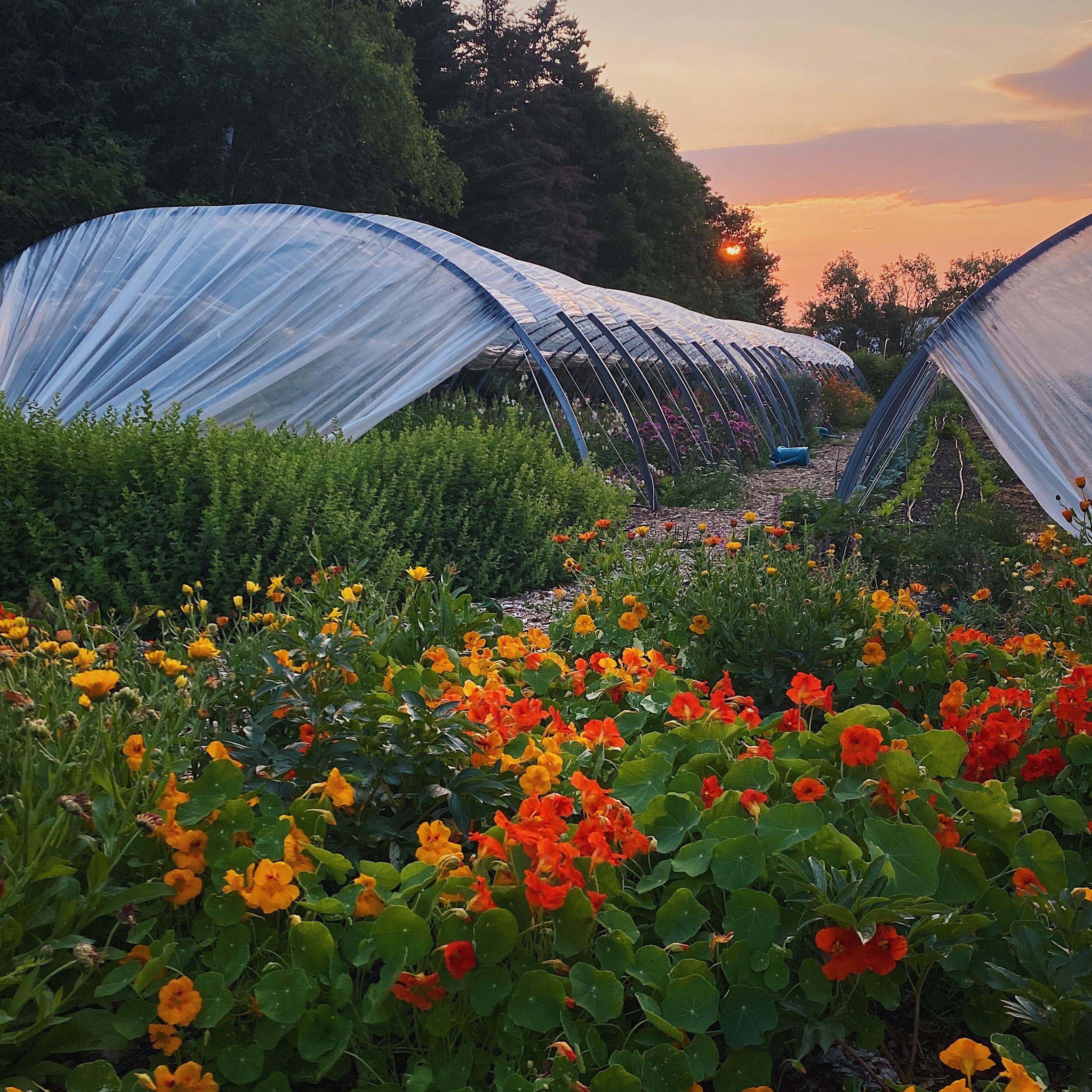
We run a market garden–style operation with six caterpillar tunnels and grow a very diverse mix of crops...well over 200 different crops.
Our main outlets are:
- Restaurants (our primary customers)
- CSA-style veggie boxes for local customers
- Cut flowers for local florists
We grow:
- Lots of leafy greens
- Tomatoes, herbs, and edible flowers
- Small roots like Asian turnips and radishes
We grow very little of the traditional Newfoundland staples—like cabbage, carrots, beets, turnips, and onions. Instead, we focus on bringing unique crops to market that people can’t usually find in local stores.
Who do you farm with?
Right now, it’s just the two of us running the farm. We don’t currently have additional staff or regular farmhands.
How did you start farming?
We began by leasing a very small plot—essentially a “bigger backyard”—in the fall of 2021 while still working in our previous careers. We just wanted to experiment with market gardening and see what was possible.
We:
- Started with about 1/16 of an acre
- Then doubled each year: 1/16 → 1/8 → 1/4 → 1/2 acre
- Now, on our new farm, we have the potential to expand to about 2 acres of market garden within a 7-acre property, with room for orchards and perennial systems as well.
The progression was gradual and very hands-on: each year we learned more, refined our systems, and scaled up as we felt ready.
When did your farm go organic (if you are not certified organic, when did you begin farming with organic practices)?
We are not certified organic, but we have farmed with organic or “beyond organic” practices from the very beginning of the farm.
From the start, we:
- Have practiced organic methods
- Integrated biodynamic practices
- Completed several permaculture courses
So even though we don’t hold certification, our practices have been organic/eco-agricultural since day one.
Why do you farm organically?
For us, organic and ecological farming was never optional—it was simply the only way we were willing to grow food.
- Tavish: I have a background in environmental engineering, so the world of ecology and environmental impact was already very familiar. Using conventional chemical inputs just wasn’t on the table.
- We both started with backyard gardening, asking: “What do we want to put into our own bodies?” When we moved into farming, that naturally became: “What are we putting into other people’s bodies?”
- Anja: Coming from Slovenia, where it’s common for everyone to have a backyard garden, the idea of large-scale chemical farming was foreign. “Natural farming” feels like the norm to us.
We genuinely believe that organically grown food is higher quality:
- We can taste the difference between our produce and typical grocery store vegetables.
- Chefs and florists also comment on the quality and flavour.
Farming organically is both a health and values decision, and a way to improve the quality and nutrient density of the local food supply.
What’s been your biggest challenge?
We’ve actually had very little pest or disease pressure, which we attribute to:
- High biodiversity on the farm
- Lots of beneficial and predatory insects
- Our organic/biodynamic practices
Our main challenges are:
1. Climate
The climate in Newfoundland is especially harsh and unpredictable:
- Temperatures can hover around 0°C for weeks in what should be the growing season.
- It’s a constant topic among small-scale farmers in the area.
Despite this, a big part of our mission is to prove that it’s possible to grow a large quantity and a diverse range of produce here. Through intentional crop planning, we:
- Have been harvesting steadily for 5–6 weeks already (at the time of the interview)
- Typically harvest from April to January
- Even harvest some very hardy crops from under the snow
2. Soil Conditions
Another major challenge is the lack of good soil:
- Much of the land is very rocky and nutrient-depleted.
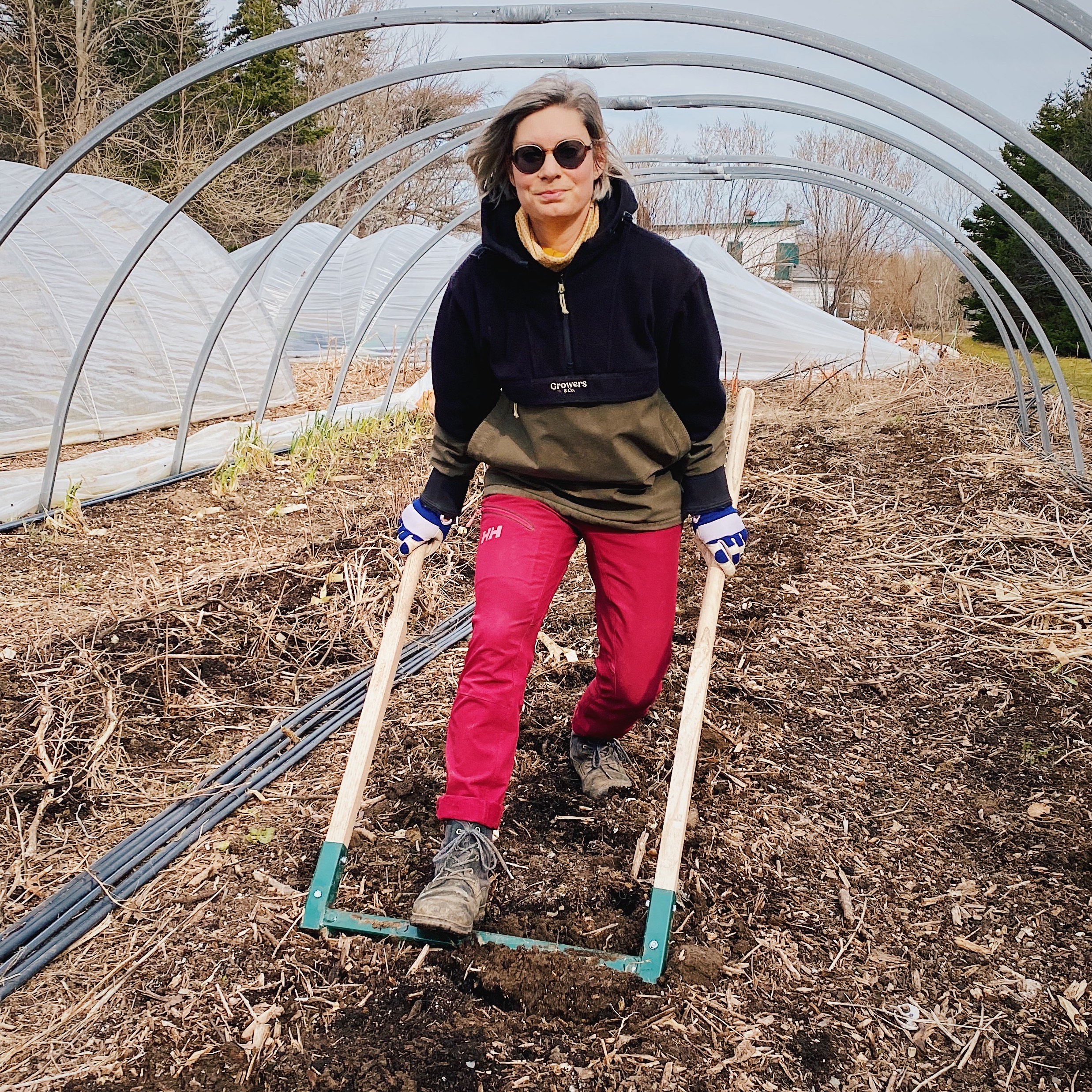
- At our new farm, there are places where we can’t even get a broadfork into the ground because of rock fragments.
- We’re constantly working to build soil, increase organic matter, and adapt our methods to these conditions.
3. Regulatory Hurdles
We’ve faced significant challenges navigating municipal and regulatory requirements:
- On the new farm, it’s been well over a year of dealing with municipal regulations, and the process is still not finished.
- This is especially frustrating given that the province imports about 95% of its food and experiences empty shelves when ferries don’t run.
We feel that while politicians talk about food security, there are still substantial roadblocks for small-scale farms trying to help solve the problem.
What gets you out of bed in the morning?
Anja:
It’s mostly about the lifestyle:
- Leaving behind the “rat race” of office work and the Monday-to-Friday grind.
- Spending the day working with nature rather than at a desk.
- Taking seriously the responsibility of being a steward of the land we own. Even when the weather is tough, there’s a moment of pausing and thinking:
“This is my office. This is my life now.” That’s very motivating.
Tavish:
It’s driven by curiosity and creativity:
- Constantly exploring new methods and ideas.
- Experimenting with different systems and approaches.
- Enjoying the chance to interact with a living system and amplify the creative energy that goes into managing the farm.
Together, both of us are motivated by the challenge and the beauty of this way of life.
What advice would you give to new/young farmers?
The best advice we received—and that we pass on—is:
1. Start small. Then go even smaller.
- Definitely start: get your hands in the soil, plant something, and begin learning.
- But start smaller than you think you should. Whatever you think “small” is, cut it in half.
- We began with about 1/16 of an acre—basically a large backyard—and doubled from there each year as we built skills and confidence.
2. Master a small area before scaling up.
- Focus on really learning how to manage a small plot well.
- It’s surprising how productive a tiny area can be when it’s well planned and cared for.
3. Learn by doing.
- You can’t plan everything on paper.
- You learn the most by actually farming—seeing what works, what fails, and adjusting as you go.
This approach keeps things manageable and less overwhelming, and helps ensure that growing remains enjoyable, not just stressful.
Are there any important questions about being an organic farmer that weren’t asked?
One topic we feel strongly about is the overall quality and nutrient density of our food supply.
- We’ve read—and experienced firsthand—that industrial agriculture has led to a decline in the nutrient density of many foods.
- We can taste a clear difference between:
- Produce grown on our farm, and
- Typical grocery store vegetables.
- Our chefs and florists repeatedly comment on the flavour and quality of what we grow.
We’d love to see:
- More conversation about nutrient density and food quality, not just yield.
- A shorter supply chain, with more local farms and organic practices.
- Growth from the roughly 500 farms currently on Newfoundland to something like 5,000—a scale that could meaningfully improve food security and resilience on the island.
For us, organic/ecological farming is about more than a label. It’s about rebuilding healthy soils, shortening supply chains, and bringing truly nourishing food back into people’s kitchens.
Find them on Instagram @farmonforest
You can enjoy the tastes of what they grow at Terre Restaurant in St. Johns, NL.